
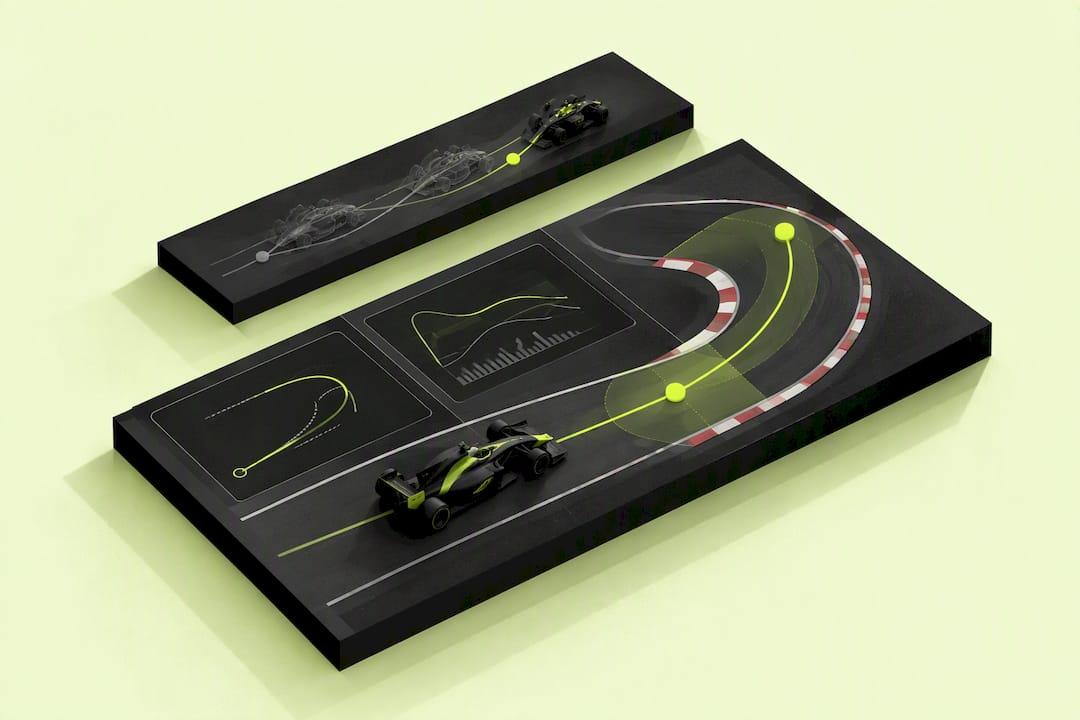
The most effective Time Trial practice in F1 26 follows a short, repeatable loop: Drive, Analyze, Improve, Repeat. Each session targets one weak corner with focused drills, then validates the gain with full-lap runs. Run this cycle consistently and you build both pace and consistency instead of chasing a single lucky lap.
TL;DR:
- Focused corner drills with repeated reference laps help isolate and fix specific braking, turn-in, and throttle techniques more effectively than full-lap attempts.
- Maintaining a reference ghost 0.3 to 0.7 seconds faster than your current pace provides a realistic target without the frustration of chasing an unbeatable time.
- Tire management, smooth inputs, and proper warm-up are crucial, as degraded tires and aggressive inputs significantly impact lap consistency and overall performance.
- Separating dry and wet practice sessions improves adaptation to changing track conditions, as each requires different techniques and approach adjustments.
- Limiting variables during practice, such as changing only one setup parameter at a time and avoiding large multi-variable adjustments, helps identify true improvement areas.
Table of Contents
- Drive, Analyze, Improve, Repeat: how to structure a useful Time Trial session
- Corner-level techniques and drills (braking, trail braking, apex, throttle)
- F1 26 setup and assist choices for Time Trial practice
- Micro-practice: a 10 to 20 minute corner-drill template
- Measuring progress and reducing lap-time variance
- Mental preparation and concentration techniques for time trials
- Physical conditioning to enhance driving performance
- Importance of tire management during time trials
- Strategies for adapting to different track conditions and weather
- Common mistakes to avoid in Time Trial practice
- Why disciplined micro-practice beats leaderboard chasing
- If you want automated lap feedback: how Virew helps Time Trial practice
- Official EA F1 documentation and reference links
- Sources
- FAQ
Drive, Analyze, Improve, Repeat: how to structure a useful Time Trial session
A session without structure turns into endless laps with no clear gain. Splitting the time into phases keeps every lap purposeful, whether you have 30-minute or full evening.
A practical template scales like this:
- Warm-up (5 to 10 minutes): two or three laps at 90% pace to settle into the car and check tire temperatures before pushing.
- Focus blocks (15 to 45 minutes): two or three blocks of 10 to 15 minutes, each isolating one corner or sequence where you consistently lose time.
- Full-lap validation (10 to 20 minutes): five to eight clean laps to confirm the corner gains actually show up in the overall lap time.
- Cooldown and review (5 minutes): a couple of relaxed laps while you mentally note what changed and what still feels inconsistent.
A 30 minute session might run one focus block and a short validation set. A 90 minute session can fit three focus blocks and a longer validation phase with time to compare your ghost lap against your own ghost.
Use the game's own replay and ghost functions as your reference point rather than external tools: watch your ghost against a faster reference lap, pause at the corner in question, and note braking point, turn-in, and exit speed by eye.
Pro Tip: End every focus block with two clean reference laps before moving to the next corner, so you can tell whether the change actually helped or just felt different.
Corner-level techniques and drills (braking, trail braking, apex, throttle)
Lap time is won and lost in the transition zones: braking into the corner, the rotation through it, and the throttle application out. Each needs its own drill.
- Braking markers: pick a fixed reference (a sign, a curb edge, a shadow) and brake at the same point for three consecutive laps before moving the marker a car length earlier or later to find the limit.
- Trail braking drill: approach the same corner three times, each time releasing the brake slightly later into the turn, and note where the car starts to rotate rather than push wide.
- Apex selection: for single-lap pace, favor a later apex that opens the exit and protects throttle application; for a safer, more stable lap, take an earlier apex that sacrifices a little exit speed for less risk of a slide.
- Throttle modulation: on exit, feed the throttle in progressively rather than mashing it, especially on corners that unload the rear, to avoid snap oversteer under power.
Work through these in sequence rather than all at once. Spend a few laps purely on the braking marker, then layer in trail braking once the marker feels consistent, and only then start experimenting with apex and throttle together. Trying to fix four things in one lap usually fixes none of them.
Pro Tip: If a corner keeps costing you time, isolate just the entry for five laps before worrying about the exit. Fixing entry speed often resolves the exit problem on its own.
F1 26 setup and assist choices for Time Trial practice
Assists and setup choices change what a lap time actually measures, so decide early what you are practicing for.
- Dynamic racing line: useful while learning a new circuit, but switch it off once you know the track so you build your own braking and apex references instead of following the game's line.
- Braking assist and traction control: helpful for newer drivers, but gradually reducing them forces you to develop real braking feel and throttle control, which pays off more in Qualifying and Race sessions later.
- Some Ranked and F1 World modes lock setups or assists entirely, so check the mode before assuming your usual configuration applies, as EA's car setup guide for tracks explains, alongside its notes on tuning by track type.
When testing a downloaded setup from the leaderboards, change one variable at a time, such as brake bias by one or two percent or the on-throttle differential by a point or two, so you can tell which adjustment actually helped. Treat borrowed setups as a starting baseline, not a finished product, since they are often tuned for a driving style different from yours. EA's accessibility resources for F1 25 also detail the driving proficiency presets and assist options worth reviewing before you lock in a practice configuration.
Micro-practice: a 10 to 20 minute corner-drill template
When one corner is costing you consistent time, a short, focused drill beats another aimless full-lap stint.
- Warm approach: two laps at a comfortable pace just to reset your reference for the corner.
- Braking trial: three laps with the brake point moved slightly earlier than your instinct, then three with it slightly later, noting which feels more controlled under load.
- Trail-brake trial: three laps releasing the brake progressively deeper into the turn to find where the car rotates cleanly without sliding wide.
- Exit mapping: three laps focused purely on throttle timing out of the corner, feeding it in earlier each time until the rear starts to protest.
Judge success by the sector time and by how many of those laps were clean, not by one standout lap. A corner you can clear cleanly eight times out of ten is worth more than a single heroic pass.
Pro Tip: Once a drill feels repeatable, go straight back into a full-lap run to confirm the gain actually shows up in the overall time, not just in isolation.

Measuring progress and reducing lap-time variance
A single fast lap tells you what is possible. A tighter spread of lap times tells you what you can actually rely on in a real session.
- Log your best lap, your average of your five most recent clean laps, and a rough count of clean versus messy laps each session.
- Track sector deltas against your reference ghost rather than only the overall lap time, since a corner you have "fixed" can quietly regress without you noticing.
- Treat a shrinking average of five as the real sign of progress. A single outlier lap is easy to produce once and hard to repeat.
- Reviewing your own replay footage after a session, or running it through an AI lap-analysis tool like Virew, helps turn a vague "that corner felt off" into a specific, prioritized change for next time.
Mental preparation and concentration techniques for time trials
Time Trial pace depends as much on focus as on car control, since a single lapse in concentration can undo several laps of careful work. Before a session, take a minute to set a clear, narrow goal, such as nailing one corner's braking point, rather than a vague aim like "go faster." A specific target gives your attention something concrete to hold onto.
During a run, keep your focus on the next braking zone rather than the lap time on screen. Glancing at the delta mid-corner is one of the easiest ways to lose a tenth you would otherwise have kept. Many sim racers find it helpful to drive a short mental rehearsal of the lap before starting, picturing the sequence of braking points and apexes in order, which primes attention for the actual run.
Fatigue shows up as concentration lapses long before it shows up as obvious mistakes. If you notice your reference points drifting, your reaction to traffic slowing, or the same corner catching you out repeatedly, that is a cue to take the five-minute cooldown rather than push through it. A tired lap rarely teaches you anything useful, and it can reinforce a bad habit instead of correcting one.
Treat each focus block as a small, contained task with a clear start and end, rather than an open-ended grind. Knowing a block will end in ten minutes makes it easier to stay sharp for the duration instead of drifting in and out of attention over a long, undefined session.

Physical conditioning to enhance driving performance
Sim racing is seated, but it is not passive. Long sessions at the wheel and pedals, especially with a direct-drive setup or load-cell brake, put real strain on your forearms, neck, and lower back, and that fatigue shows up as inconsistency long before it shows up as obvious pain.
Simple habits help more than any single piece of gear. Sit with your hips and shoulders square to the wheel rather than twisted, since a slight lean compounds into real steering errors over a long stint. Keep your grip relaxed rather than locked tight on the wheel, because a tense grip transmits small hand movements straight into the car and makes fine inputs harder to control, particularly under braking.
Short breaks matter more than most drivers expect. Standing up, stretching your wrists and neck, and resetting your posture every 20 to 30 minutes keeps your inputs sharp for longer than pushing through a two-hour block without a pause. Basic cardiovascular fitness also helps indirectly, since sustained concentration draws on the same stamina that supports physical endurance, and a driver who tires quickly tends to lose focus at the same rate.
None of this requires a training program built around sim racing specifically. Treating your setup like a desk you sit at for long periods, with attention to posture, breaks, and hydration, covers most of what matters for staying sharp across a full Time Trial session.
Importance of tire management during time trials
Time Trial in F1 26 is a single-lap pursuit, but tire condition still shapes the result more than most drivers assume. A cold tire grips less and reacts less predictably, which is why the warm-up phase of a session matters: two or three laps at a measured pace bring the tires up to a working temperature before you start pushing braking points to the limit.
Within a single push lap, how you treat the tire in the opening corners affects what grip is left for the final sector. Aggressive, snapping inputs early in the lap can overheat the fronts or rears before the corners that matter most, leaving you with less margin exactly when you need it. Smoother, progressive inputs protect that margin even on a flat-out lap.
Across a longer practice session, repeated hard stops at the same braking marker without any rest laps can leave tires in a degraded state that masks whether your actual technique has improved. If your lap times get worse through a long focus block, consider whether tire condition, not your braking point, is the real culprit, and reset with a fresh set or a slower lap before judging a drill's result.
Strategies for adapting to different track conditions and weather
Dry and wet Time Trial practice are different skills, and treating them as variations of the same technique usually costs time in both. In the dry, the priority is finding the limit: the latest braking point, the tightest apex, the earliest throttle application the tires can take.
In the wet, the same aggressive references become liabilities. Braking points move earlier, sometimes well earlier than feels natural, because wet tires generate less stopping grip and lock up sooner. Turn-in needs to be gentler, and throttle application on exit has to be progressive rather than immediate, since a wet surface offers far less margin before the rear steps out.
Track surface also changes within a single session, dry or wet, as rubber builds up on the racing line or a wet track starts to dry in patches. If your reference ghost was set on a different track state than you are currently driving, expect the comparison to be misleading, and recalibrate your braking markers for current conditions rather than trusting a lap set earlier in the session.
Practicing wet conditions separately, with their own warm-up and focus blocks rather than folding them into a dry session, builds the specific feel for reduced grip that dry practice cannot teach. A driver who only ever practices dry laps tends to carry dry-condition confidence into a wet session, which is a common source of early offs.
Common mistakes to avoid in Time Trial practice
A few habits quietly undermine otherwise solid practice sessions.
Chasing a single perfect lap instead of building a repeatable one is the most common trap. A personal best set once, with everything going right, does not reflect what you can reliably produce, and it can mask real weaknesses in your technique.
Changing too many variables at once is another. Adjusting brake point, apex, and throttle timing in the same lap makes it impossible to tell which change actually helped, and which one hurt.
Skipping the warm-up and full-lap validation phases is easy to do when a session feels short on time, but it leaves you guessing whether a corner-drill gain actually translates to the full lap, or whether it was specific to the isolated practice conditions.
Ignoring tire and track state, pushing through degraded tires or a changing wet track without adjusting expectations, leads to false conclusions about whether a technique change worked.
Finally, relying entirely on a leaderboard ghost that is far faster than your current pace tends to produce frustration rather than learning, since the gap is too wide to translate into specific, actionable changes.
Why disciplined micro-practice beats leaderboard chasing
Chasing a leaderboard time rewards one lucky lap. A short corner drill, validated on full laps, rewards the technique that actually holds up under race conditions. Keep wet and dry practice separate, and let the Drive, Analyze, Improve, Repeat loop guide every session instead of the clock.
— Virew
If you want automated lap feedback: how Virew helps Time Trial practice
Watching your own replay for clues about a slow corner only goes so far. Virew reads the actual lap you drove in F1 26 and turns it into plain-language coaching on braking points, racing lines, throttle timing, and ERS management, mapped directly onto the Drive, Analyze, Improve, Repeat cycle you are already running.
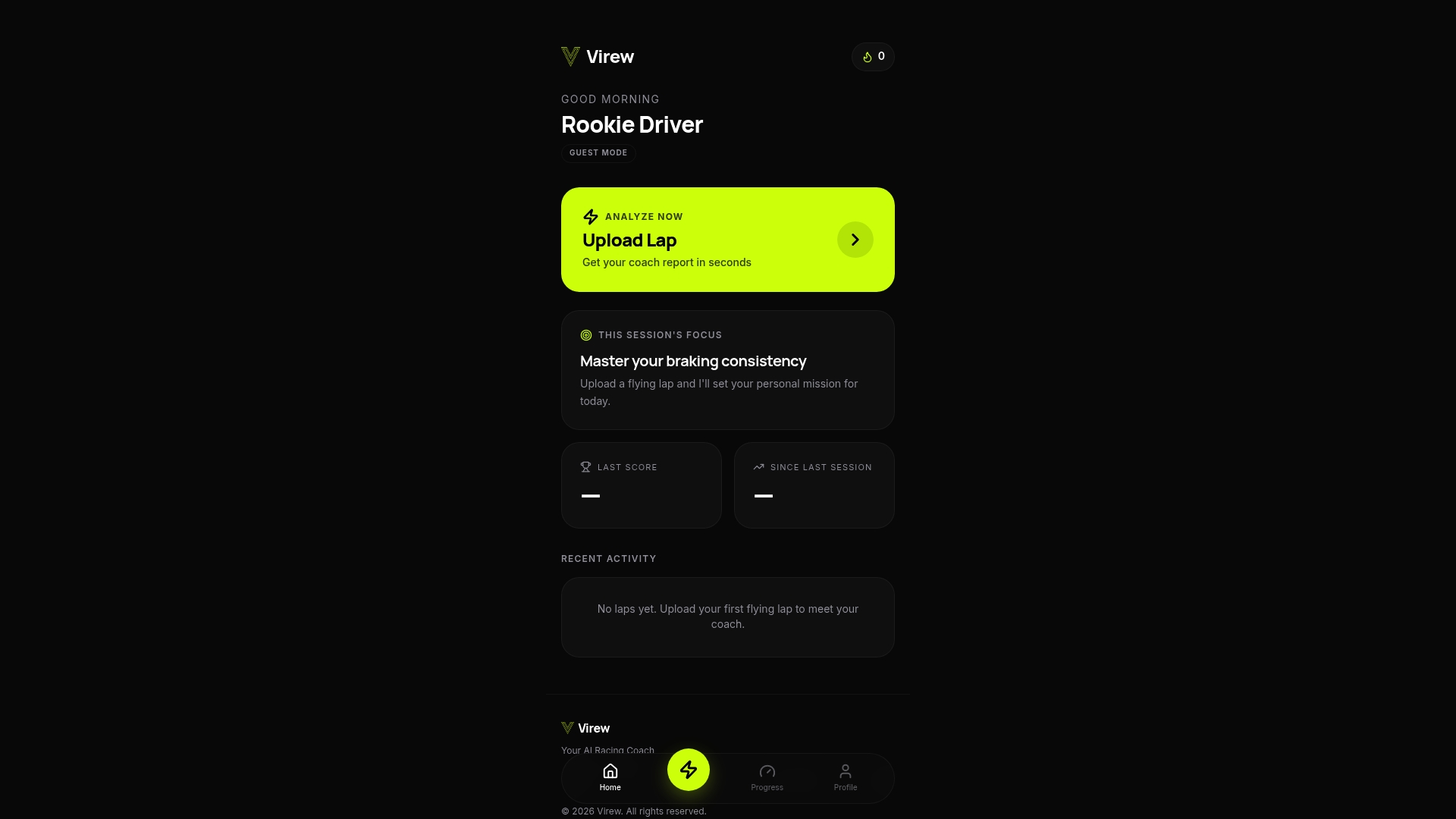
- The Free plan gives you a limited number of lap analyses each month, enough to test the coaching on your current weak corner.
- The Pro plan unlocks unlimited lap analyses, longer video uploads, and full history, useful for more intensive practice.
Upload a lap from your next focus block and see exactly where the time went instead of guessing from a replay. Start with the Virew lap analysis guide to see how the free and Pro tiers work, or go straight to how to get faster in F1 26 for more drill ideas before your next session.
Official EA F1 documentation and reference links
For setup and assist details beyond what is covered here, EA's own documentation is the primary reference: the car setup guide for tracks, the accessibility resources page covering assists and proficiency presets, and the F1 25 tips and tricks page for general session setup notes.
Sources
A ghost that is too fast teaches you nothing except frustration. A ghost roughly 0.3 to 0.7 seconds quicker than your current pace is close enough to study line by line, but still realistic to chase within a session.
- How to set up a car for different tracks in EA SPORTS F1® 25
- F1® 25 Accessibility Resources - An Official EA Site
Once you close the gap to your current reference ghost, set a new one slightly faster and repeat the process.
FAQ
How long should a Time Trial practice session be in F1 26?
A useful session can run anywhere from 30 to 90 minutes, as long as it includes a short warm-up, one or more focused corner drills, and full-lap runs to confirm the gain. Shorter sessions should focus on a single corner rather than trying to cover the whole lap.
Should I use the dynamic racing line while practicing Time Trial?
The dynamic racing line is useful while learning an unfamiliar circuit, but switching it off once you know the track helps you build your own braking and apex references. Relying on it long-term tends to mask inconsistent technique rather than fix it.
How much faster should my practice ghost be?
A ghost around 0.3 to 0.7 seconds quicker than your current pace gives you a realistic, sector-by-sector target to study. A leaderboard-topping ghost is usually too far ahead to translate into specific, actionable changes.
Can Virew analyze my Time Trial laps for free?
Yes, Virew's Free plan includes a limited number of lap analyses each month, enough to get coaching on a specific corner or session. Unlimited analyses and extended history are available on the Pro plan, detailed on the Virew lap analysis guide.
Should I practice wet and dry conditions in the same session?
Keep wet and dry practice separate, since braking points, turn-in, and throttle timing all change significantly with reduced grip. Treating them as one skill tends to carry overly aggressive dry habits into wet conditions, which is a common source of mistakes.