
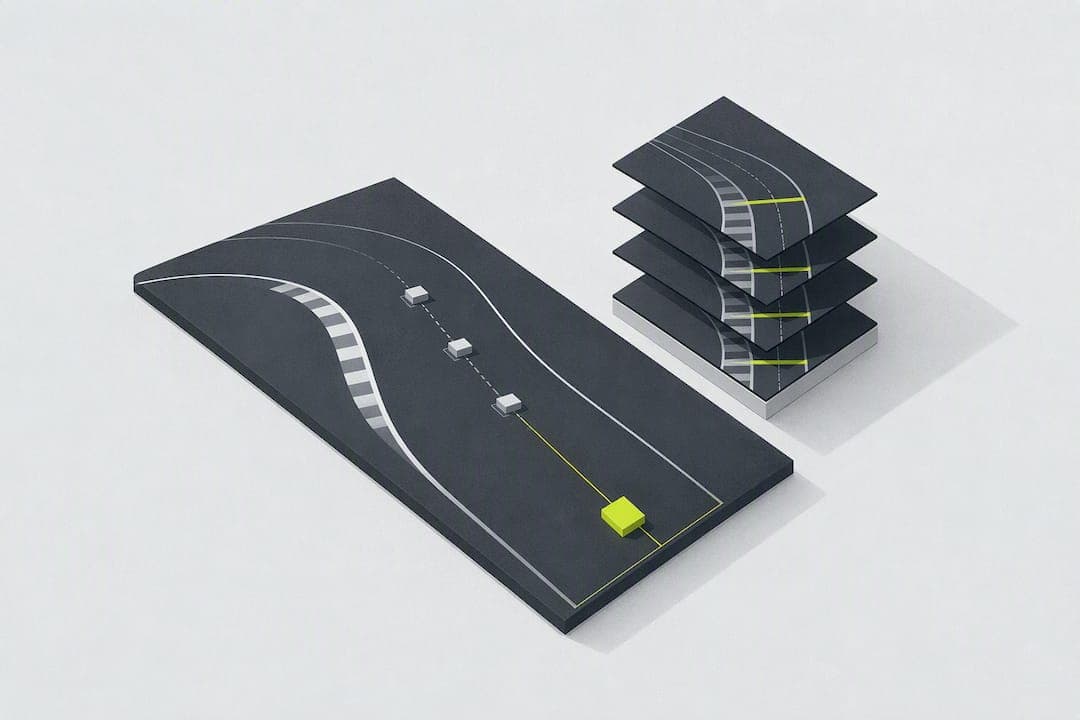
Threshold braking is applying the maximum brake force the tires can handle without locking the wheels, which produces the shortest stopping distance while keeping full steering control. It's a manual skill, not something a car does for you. Learn it, and you brake later, straighter, and more consistently than most drivers ever will.
TL;DR:
- The threshold grip point varies with road surface, tire condition, load, and weather, requiring constant real-time sensing and adjustment during braking.
- ABS often outperforms manual threshold braking on public roads due to its faster response, but skilled drivers excel in controlled environments or specific conditions.
- Practicing threshold braking effectively involves smooth pedal pressure, gradual adjustments, and repetitive drills in safe, closed areas to develop feel and consistency.
- Lockups occur when drivers react by pressing harder rather than easing off initially, making correct pedal modulation critical for safe and effective braking.
- Data tracking from practice sessions can reveal inconsistencies in braking points, helping drivers improve lap times by memorizing and maintaining the optimal threshold.
Table of Contents
- What Is Threshold Braking, Physically Speaking?
- When Should You Use Threshold Braking Instead of ABS?
- How to Learn Threshold Braking: Step-by-Step Technique and Drills
- What Changes the Threshold, and How Do You Adapt?
- Common Threshold Braking Mistakes and How to Fix Them
- A Safe, Structured Practice Plan for Threshold Braking
- Why Threshold Braking Consistency Is the Metric That Actually Predicts Lap Time
- Ready to See Your Own Braking Consistency on Data?
- Where to Go Deeper on Threshold Braking
- Why Most Drivers Overestimate How Fast They Can Learn This
- Sources
What Is Threshold Braking, Physically Speaking?
The reason threshold braking works comes down to one fact about rubber and pavement: a tire has more grip right before it slides than after. Static friction, the grip of a tire still rotating and gripping the road, is higher than kinetic friction, the grip of a tire that's already sliding. Once a wheel locks and starts skidding, braking force actually drops, and steering input becomes useless because a sliding tire can't generate lateral grip.
That peak friction point sits in a narrow window. Push past it and you lock up and lose stopping power. Stay well short of it and you're leaving distance on the table.
There's a second physical effect working in your favor as you brake: forward weight transfer. As the car decelerates, weight shifts onto the front axle, pressing the front tires into the road harder and temporarily increasing the grip available there.
- Static friction beats kinetic friction, so a rolling, gripping tire stops the car faster than a locked one.
- Locking a wheel kills both braking force and steering response at the same moment.
- Weight transfer loads the front tires during hard braking, which is why front brakes do most of the work in a straight-line stop.
When Should You Use Threshold Braking Instead of ABS?
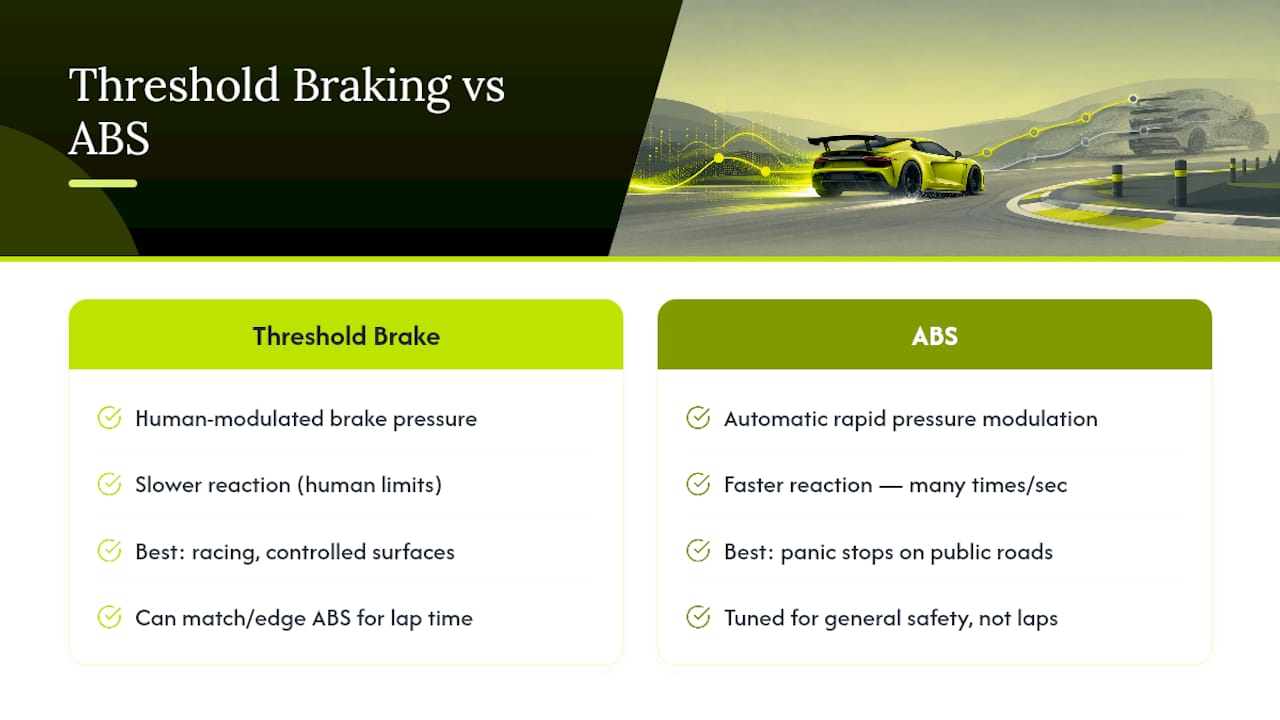
Anti-lock braking systems exist to solve exactly the problem threshold braking solves manually. ABS senses an impending lock and rapidly modulates brake pressure, preventing wheel lock automatically many times per second, far faster than a human foot can react.
For panic stops on public roads, ABS wins for most drivers. It reacts faster than trained reflexes and does not degrade under stress the way manual technique can.
Manual threshold braking earns its place in racing and controlled environments, where consistent surfaces and repeated laps let a skilled driver find and hold that peak grip point, sometimes matching or edging out an ABS system tuned for general safety rather than lap time. On loose surfaces like deep gravel or snow, ABS can actually underperform, and experienced rally drivers occasionally let wheels dig in, but that's an advanced exception, not something to try on a public commute.
How to Learn Threshold Braking: Step-by-Step Technique and Drills
Threshold braking is a feel skill, built through repetition, not memorized as a formula. Here's the sequence to actually build it.
Before you start: pick an empty parking lot, a skid pad, or a track day session, never a public road. Check your surroundings for a clear runoff area and confirm there's nobody behind you.
- Squeeze, don't stomp. Press the brake pedal with progressively increasing pressure rather than an abrupt jab. Ramp up smoothly until you feel the first hint of tire slip, a slight chatter through the pedal or a moment where the car feels like it's about to skip.
- Ease back a touch. The instant you sense that slip, back off the pressure just slightly. That small release puts you right back onto the grippy side of the threshold.
- Hold the edge. Maintain that pressure, adjusting in tiny increments as speed drops and grip conditions shift underneath you.
- Release smoothly at your stopping point. Don't snap off the pedal; ease out as the car settles.
Once you've got the motion, layer in drills:
- Low-speed progressive stops. Start around 30 mph in a straight line and build the squeeze-ease-hold rhythm before adding speed.
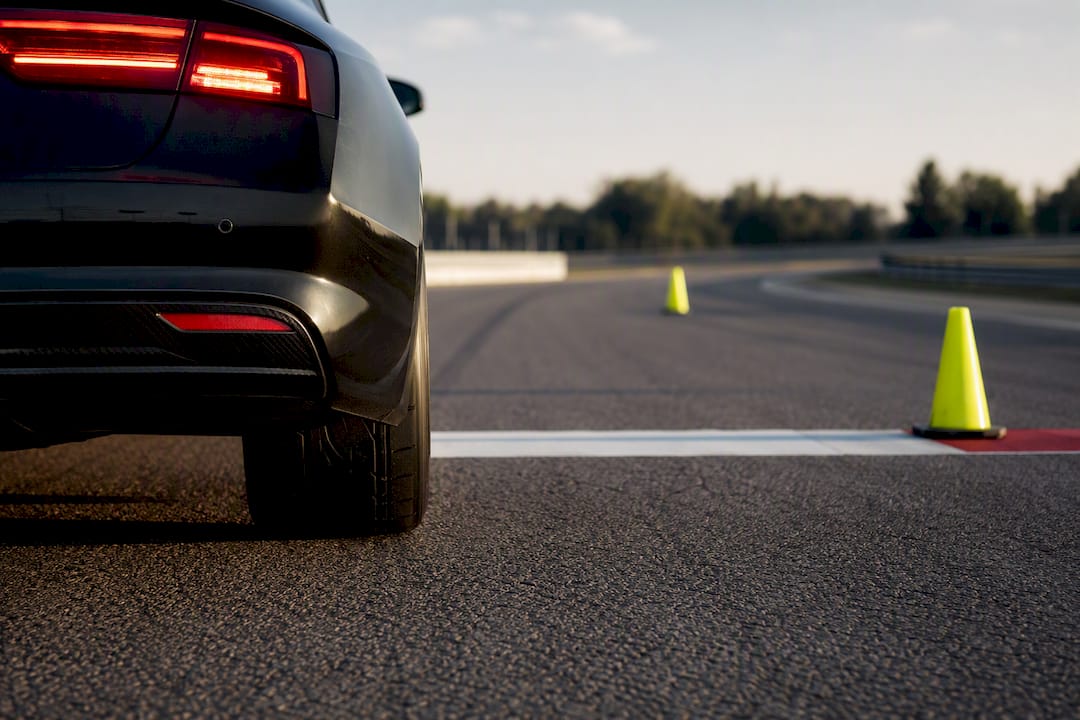
- Braking to a marker. Pick a cone or line and try to stop at the exact same spot, lap after lap. Consistency, not just distance, is the goal.
- Cadence braking for non-ABS cars. If you're driving something without ABS, practice a rapid pump technique as a backup for recovering from an accidental lock.
- Clutch and heel-toe integration. Once basic stops feel natural, practice braking through downshifts so clutch timing doesn't disrupt your pedal pressure.
Track your progress by measuring how tightly your stopping point clusters around that same marker and by noting how early you can sense slip through the pedal. Consistency is the real scoreboard here.
Pro Tip: Record your practice sessions on video from the side. Watching your own brake lights and stopping point on playback reveals inconsistency you can't feel from the driver's seat.
What Changes the Threshold, and How Do You Adapt?
The threshold isn't a fixed number. It moves constantly, and an instructor's core lesson is that drivers have to relearn that feel for every car and every condition, because surface, tires, temperature, and weight distribution all shift where peak grip sits.
- Surface: dry asphalt gives the most grip, wet pavement cuts it noticeably, gravel and snow or ice can drop it to a fraction of dry conditions.
- Tires: compound, wear level, inflation pressure, and temperature all move the threshold, cold tires grip less than warmed ones.
- Load and gradient: a heavier car or a downhill section shifts the threshold earlier; braking in gear versus with the clutch in changes how much drivetrain resistance helps resist lock, since clutch-in removes that resistance and lowers the lock point.
- Split-mu situations: when one side of the car sits on a lower-grip surface than the other, you brake for the wheel with the least grip. Ignoring this invites a violent spin.
Adapting in real time means constantly re-sensing the pedal rather than trusting a fixed pressure from your last stop.
Common Threshold Braking Mistakes and How to Fix Them
Most lockups happen because a driver reacts to a slipping wheel with more pressure instead of less. That's backward. The fix is always to ease off first, then reapply progressively once the tire regains rolling grip.
- Panic hammering: slamming the pedal locks wheels instantly. Ease off, let the tire start rolling again, then reapply gradually.
- Misreading pedal feedback: ABS pulses feel like a buzzing pedal, that's the system working correctly, not a fault. A non-ABS lock feels like a dead, silent pedal with no chatter at all.
- Clutch-in lockups: pressing the clutch mid-braking removes engine resistance and can trigger an unexpected lock, so time gear changes carefully during hard stops.
- Split-mu snap: if the car suddenly yaws under braking, ease pressure immediately, straighten the steering, then reapply braking gradually rather than all at once.
Pro Tip: If you're not sure whether you locked a wheel or just heard ABS cycling, listen for rhythm. A steady mechanical pulsing is ABS. A single flat screech is a lock.
A Safe, Structured Practice Plan for Threshold Braking
Run this in a closed course, an empty lot, or a proper track day, never on public roads, and always with an observer and a clear escape route.
- Warm up tires and brakes with a few easy stops from 20 mph.
- Progressive stops from 30 mph, aiming to feel slip and ease off cleanly each time.
- Repeat at 40 mph, checking that your stopping point stays consistent within a car length or two.
- Add a fixed marker and try to stop within a set distance of it every time.
- Introduce a downshift mid-stop to practice clutch and brake coordination.
- Cool down with a few gentle stops, then check brake temperature before repeating any high-speed runs.
Success looks like a tight cluster of stopping points and a pedal that tells you exactly when you're at the edge, not chasing it.
Why Threshold Braking Consistency Is the Metric That Actually Predicts Lap Time
Braking variance costs more lap time than most drivers realize. A driver who brakes at a slightly different point every lap isn't just losing feel, they're losing predictable corner entry speed, which cascades into inconsistent apex speed and exit throttle.
Coaches who watch onboard footage look for exactly this: how tightly a driver's braking point and pressure repeat, lap after lap. That's the pattern Virew is built to catch. It analyzes uploaded laps from F1 26 and flags braking inconsistency directly, then hands rookie drivers specific missions to tighten that pattern instead of vague general advice.
Ready to See Your Own Braking Consistency on Data?
Reading about the perfect squeeze-ease-hold rhythm only gets you so far. What actually moves your lap time is knowing, lap after lap, whether your braking point drifted three meters or stayed locked in.
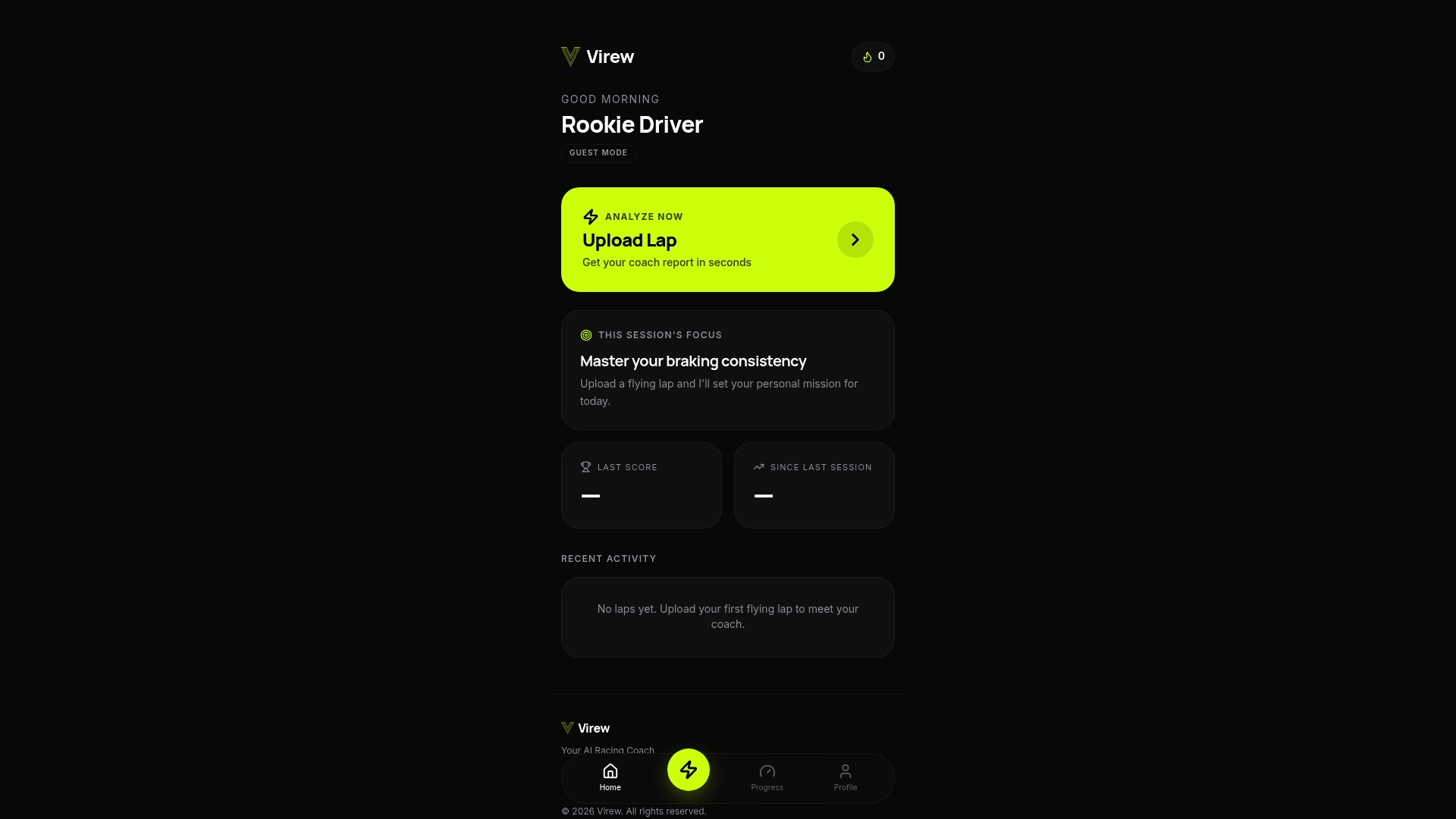
Virew reads your uploaded F1 26 laps and reports exactly where your braking varies, how your entry speed compares corner to corner, and what to fix first. Instead of a generic checklist, you get a personalized mission built from your own data, whether that's tightening your marker point at Turn 1 or smoothing your trail-brake into a fast sweeper. Start with a free lap analysis to see where your braking consistency actually stands, then use the follow-up missions to close the gap lap after lap.
Where to Go Deeper on Threshold Braking
For technique reinforcement beyond text, watch instructor-led demonstrations like Team O'Neil's rally braking breakdown, which shows the feel of finding the limit in real time. The Saskatchewan Driver's Handbook covers safe recovery techniques for everyday driving, and Veloce Driving's breakdown of the technique walks through the pedal mechanics in more depth.
Why Most Drivers Overestimate How Fast They Can Learn This
Here's the uncomfortable truth about threshold braking: it degrades almost immediately without practice, and most drivers wildly overestimate how much of it they retain between sessions. You don't learn threshold braking once. You relearn it every time you change cars, tires, or conditions, because the peak grip point moves with all three.
The conventional advice, "practice until it becomes second nature," undersells how specific that nature has to be. Muscle memory tuned to your street car's soft factory pads will betray you on track tires with twice the grip and half the pedal travel. That's why generic braking tips plateau fast. What actually works is measuring your own stopping consistency across your own sessions, not chasing someone else's technique description.
Data-driven feedback closes that gap faster than seat time alone, because it shows you the pattern you can't feel from inside the car: the three meters of drift in your braking point you swore wasn't happening. Trust the pedal, but verify with the numbers.
— Marcus
Sources
- What are Anti-Lock Brakes and how do they work? | The AA
- Threshold braking — Wikipedia
- Threshold Braking Explained By Rally Instructor - Team O'Neil
- What is Threshold Braking? Essential Driving Techniques | Veloce Driving
- Braking - Saskatchewan Driver's Handbook