
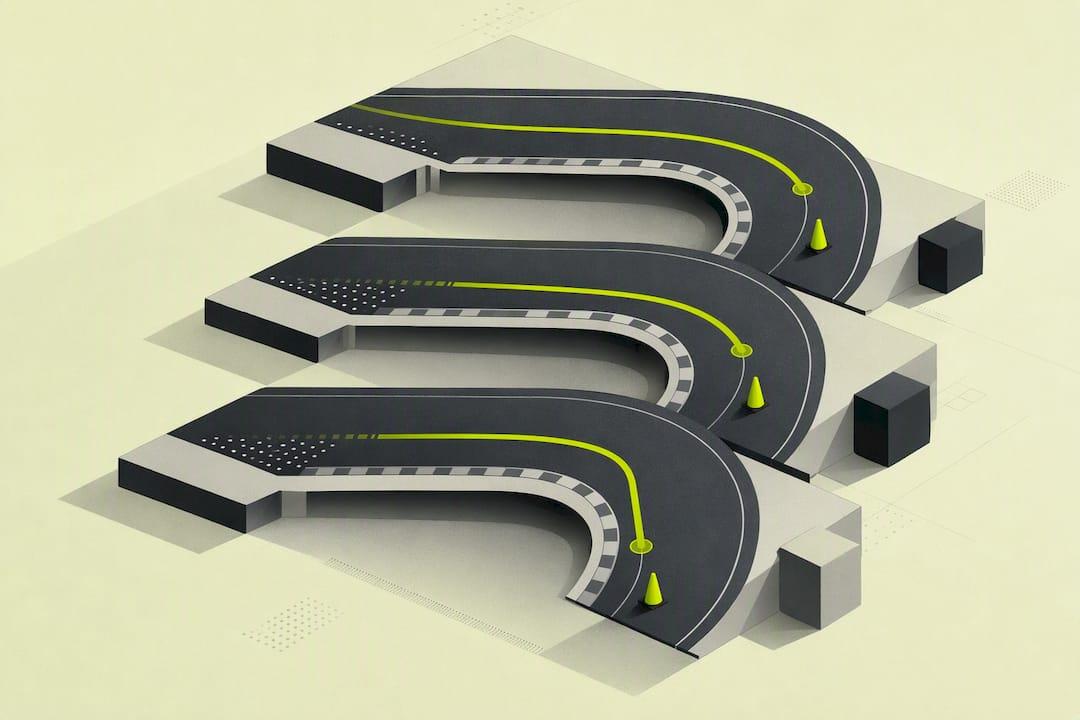
Brake release timing in F1 26 means how and when you bleed off brake pressure during corner entry, through trail braking, and into the throttle. The rule: hit your threshold brake pressure hard in a straight line, then taper it smoothly as you add steering, keeping a trace of brake pressure alive right up to the apex on slower corners. In Time Trial and Qualifying, push that release later and sharper for outright pace. In Race sessions, release a fraction earlier and smoother, because consistency across 50 laps beats one perfect lap surrounded by lockups.
TL;DR:
- Proper brake release timing ensures front tire load is maintained for adequate rotation without risking lockup or loss of grip, especially in medium and slow corners.
- Different corner types require distinct release shapes: a taper for most corners, a quick drop for high-speed turns, and a hold for hairpins, with adjustments based on session type and driver aid settings.
- Consistent practice using incremental drills and careful reference points accelerates skill development, while common mistakes include double humps, dumping brake pressure, and improper trail braking application.
- Analyzing your own brake traces with tools like Virew can pinpoint specific issues such as double humps or early release, enabling targeted correction and improved lap times.
- In Race, a slightly earlier and smoother release is more sustainable over many laps, while Time Trial favors later, sharper releases for maximum single-lap speed.
Table of Contents
- How Brake Release Timing Works: Weight Transfer, Inputs, and Release Shapes
- Timing Patterns By Corner Type: Hairpins, Medium Speed, and High Speed
- How to Practice Brake Release Timing: A Session Plan That Actually Builds the Feel
- Common Brake Release Mistakes and How to Fix Them
- Your In-Session Brake Release Checklist
- The Virew Perspective: Why Iteration Beats One-Off Corrections
- Get a Braking Breakdown of Your Own Laps With Virew
- Sources
- FAQ
How Brake Release Timing Works: Weight Transfer, Inputs, and Release Shapes
The front tires only have so much grip to share. Every bit of steering angle you add eats into the grip budget the brakes were using, and every bit of brake pressure you're still carrying eats into the grip budget steering needs. That's the entire game of trail braking: managing a trade between two inputs fighting for the same tire. Brake pressure has to come down in proportion to how much steering you add, or the front tires lock, wash wide, or both.
This is why brake release timing matters more than peak brake pressure. A car with weight still pressing into the front tires rotates better than one that's already settled back onto its rear springs. Dump the brake too early and that weight transfers backward before you've turned the wheel, and the front end goes light exactly when you need it planted.
Three release shapes cover most F1 26 corners:
- Taper: a smooth, linear bleed from threshold pressure down toward zero, timed to finish right around the apex. This is the default shape for most medium and slow corners.
- Drop: a quick reduction early in the corner, used on faster corners where you need the car settled before you can carry speed through.
- Hold: keeping a flat percentage of brake pressure through the middle of the corner before releasing, used on hairpins where rotation needs sustained help.
Your assist settings shift how forgiving each shape is. Running ABS on widens your margin for a slightly abrupt release because the system catches minor lockups for you. Turn ABS off and your release window tightens considerably, rewarding a genuinely smooth taper and punishing anything jerky. Brake bias also matters here: a rearward bias setting gives you more front grip to play with during release, which is why many drivers nudge bias back a click or two specifically to make trail braking easier to execute consistently.
Session type changes your target. In Time Trial, you're chasing one clean lap, so you can afford a later, sharper release that lives closer to the edge of lockup. In a Race, that same aggression across 20 or 50 laps turns into inconsistent tire wear and the occasional off. Race pace rewards a release that's slightly earlier and repeatable over one that's a tenth faster but only works four laps out of five.
Timing Patterns By Corner Type: Hairpins, Medium Speed, and High Speed
Not every corner wants the same release shape, and treating a hairpin like a fast sweeper (or vice versa) is where a lot of lap time quietly disappears.
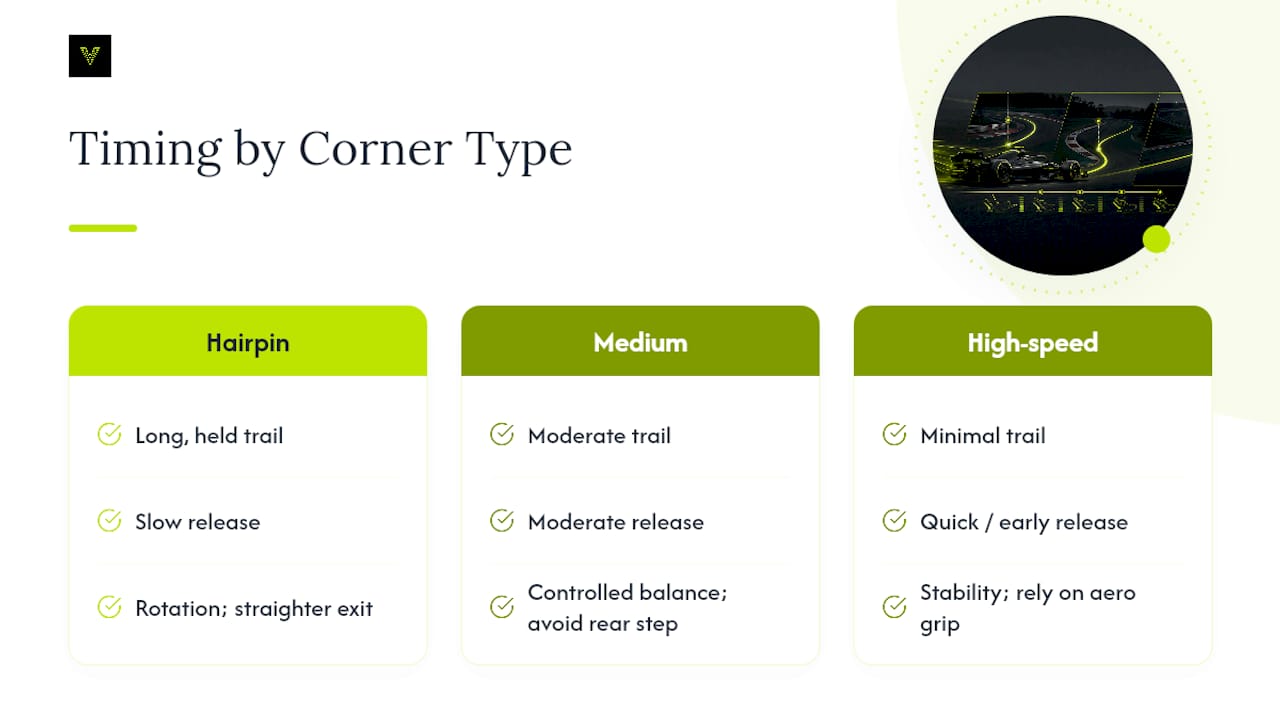
Hairpins (think the final corner at the Yas Marina circuit or Turn 3 at Baku) need a long, held trail deep into the apex. Holding that little bit of brake that long helps rotate the nose through a corner where the radius tightens sharply, and it sets up a straighter exit line onto the following straight.
The feel cue here is subtle rotation, not aggressive turn in. If you feel the rear stepping out under trail brake in a medium-speed corner, you're carrying too much pressure too late.
High-speed corners (Turn 8 at Barcelona, Eau Rouge into Radillon at Spa) want minimal trail and a much quicker release. Stability matters more than rotation at these speeds, and holding brake pressure into a fast corner is one of the more reliable ways to trigger a snap of oversteer you won't catch in time. Get off the brake earlier and let the car's aerodynamic grip do the cornering work instead.
The 2026 regulation cars change these shapes slightly compared to older generations, since the aerodynamic and tire behavior differs enough that high-speed corners reward an even earlier release to keep the platform stable. If you're adjusting from a previous car model, the 2026 car adaptation guide covers how the handling shift affects entry speed and rotation more broadly.
How to Practice Brake Release Timing: A Session Plan That Actually Builds the Feel
Release timing is a motor skill, not a knowledge problem, which means reading about it only gets you so far. You build it through repetition targeted at the specific failure point.
- Run the 10-7-5-3-0 drill. Pick one corner and consciously talk yourself through the release: 100%, then roughly 70%, 50%, 30%, down to 0% right at the apex. Do 8 to 10 laps focused only on that one corner. Success looks like a smooth, even trace of pressure disappearing, not a series of steps or a sudden drop.
- Rehearse with an apex timer. Pick a fixed reference point (a curb marking, a sponsor board) and brake noticeably earlier than your limit at first. Braking earlier than your true limit gives you spare time in the braking zone to focus purely on release quality instead of survival. Once the release feels automatic, move your braking reference a few meters later and repeat.
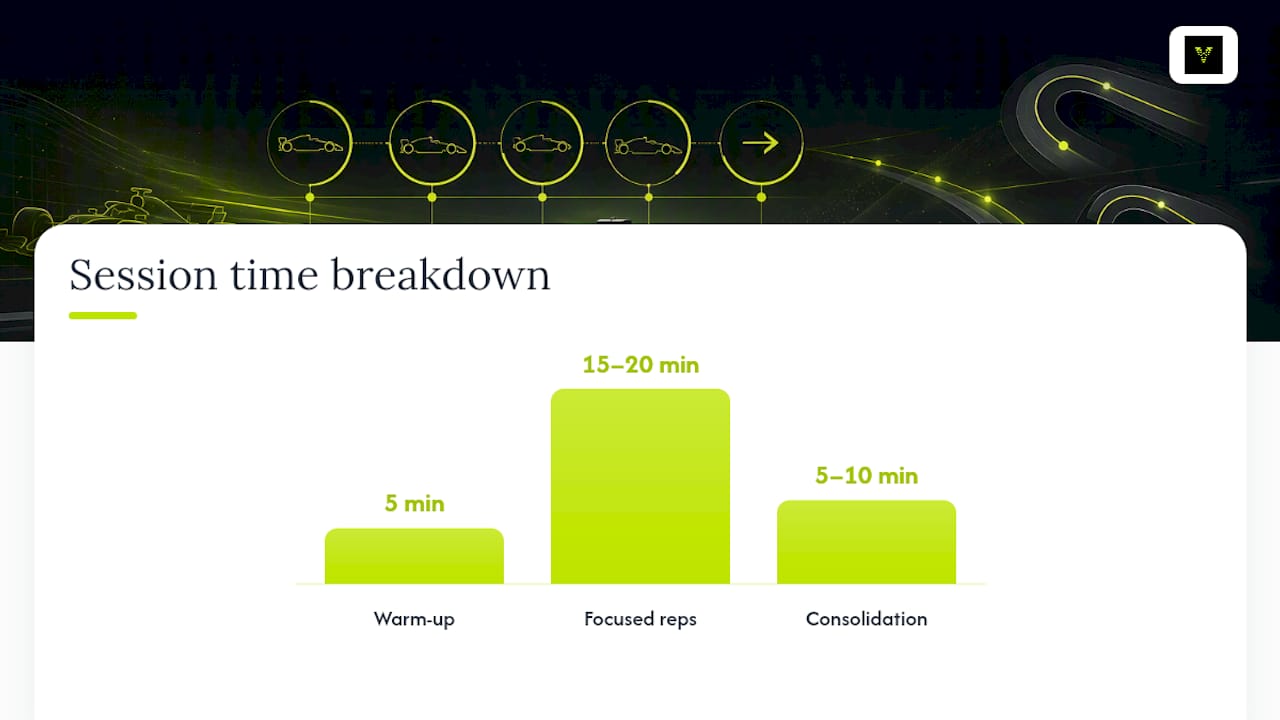
- Structure the session in three blocks. Spend 5 minutes warming tires and getting a baseline feel, 15 to 20 minutes on focused corner reps using steps 1 and 2, then 5 to 10 minutes running consolidation laps that string the whole circuit together.
- Check your controller settings before you start. Reasonable starting values are a Brake Deadzone of 0 to 2, Linearity around 25 to 35, and Brake Pressure at 95 to 100% with ABS on or 88 to 94% with ABS off. Linearity in particular decides how fine your control feels in that critical 10 to 30% pressure range where most release mistakes happen.
Pro Tip: Record which corner you're drilling before the session, not after. Drivers who pick a target corner in advance and stick to it for the full 20 minutes improve their release consistency far faster than drivers who chase whichever corner felt bad on the last lap.
For a broader practice structure beyond just braking, the lap time improvement guide walks through how release drills fit into a full session plan.
Common Brake Release Mistakes and How to Fix Them
Double hump (lift then reapply). You release brake pressure, feel the front go light mid-corner, and stab the brake again to correct it. This produces a visible double bump in the brake trace and costs real time because you're braking twice for one corner. Fix it with slow, deliberate brake-hold reps: practice the same corner at reduced speed until you can complete one continuous release without a single correction.
Dumping the brake at turn-in. The pressure trace shows a cliff instead of a slope. It happens when a driver releases early out of habit rather than by feel. The fix is the early-brake rehearsal from the drill above: back off your braking point, then focus entirely on making the release last the full duration of the corner.
Holding full brake while turning. This locks the front tires or pushes the car wide. Flatten your release curve earlier and consider a click or two of rearward brake bias, which frees up front grip during the turn.
Trail-braking a corner that doesn't need it. Some corners actually rotate worse with trail brake and start to spin. If a corner keeps snapping on you, stop trailing entirely, kill the rotation with a brief straight-line brake, then reapply throttle cleanly.
Your In-Session Brake Release Checklist
Run through this before you turn a lap and again if your pace drops off mid-session:
- Confirm your reference point and check that your brake pressure and bias haven't drifted from your baseline.
- Hit threshold pressure hard in a straight line, then start tapering the instant steering begins.
- Keep a small trace of brake alive to the apex on slow and medium corners; release earlier on fast ones.
- Begin throttle only once the taper reaches near zero, not before.
- If lap time drops, brake earlier and smooth the release out before chasing a later braking point again.
The Virew Perspective: Why Iteration Beats One-Off Corrections
Fixing release timing in isolation rarely sticks, because the mistake usually shows up differently lap to lap. Virew treats it as a loop: Drive, Analyze, Improve, Repeat. Upload a lap and the analysis looks specifically at release consistency, the shape of the taper, and what exit speed that release actually produced, not just whether you braked "late enough."
Corner type matters here too. A release fix that works at a tight hairpin does nothing for a fast direction change, so coaching that treats every corner the same misses the point entirely. The value in repeated lap analysis is watching whether a fix from last session actually held up this session, across different corner types and different tire conditions, not just whether one lap looked clean.
— Virew
Get a Braking Breakdown of Your Own Laps With Virew
Reading about release shapes helps, but seeing your own brake trace against your own corners is what actually closes the gap. Virew is built specifically to spot the patterns covered above, like a double hump at Turn 4 or a dumped release at a hairpin, directly from footage of your F1 26 laps rather than generic advice that ignores what you're actually doing on track.
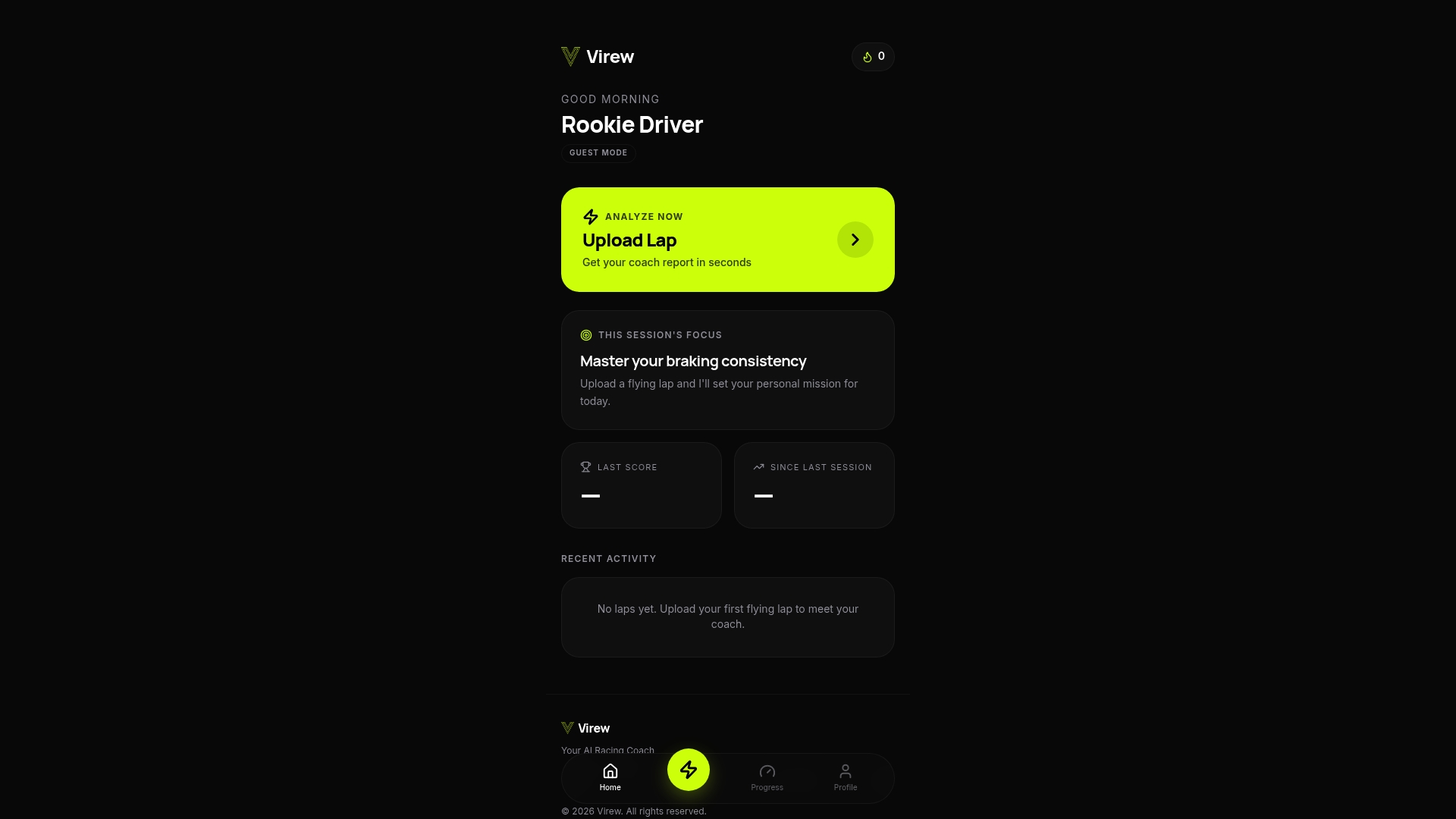
Upload a lap through the F1 26 lap analysis tool and the coaching report flags exactly which corners show inconsistent release shapes, then gives you drills matched to those specific corners instead of a one-size-fits-all list. The Free plan gets you started with a limited number of analyses each month, and the Pro plan unlocks unlimited laps if you want to track release consistency across a full season of practice. Start by uploading your worst braking zone and see what the trace actually looks like.
Sources
- 5 Braking Mistakes Destroying Your Laps In F1 25 (How To Fix Them) — SimRacingSetup
- How to trail brake in sim racing (drills + setup) — GitGud Racing Academy
- Trail braking guide — RealSport101
FAQ
What Is Brake Release Timing in F1 26?
It's how and when you reduce brake pressure during corner entry and trail braking, from your initial threshold hit through the taper into the apex. Getting it right keeps the front tires loaded enough to rotate the car without locking up or running wide.
How Do I Know If I'm Releasing the Brake Too Early?
The car usually understeers or runs wide on entry because the front tires lost load before you finished turning. Try holding a small percentage of brake pressure a beat longer into the corner and see if the nose tucks in more willingly.
What's the Double-Hump Brake Trace and Why Does It Cost Time?
It's when you lift off the brake and then stab it again mid corner, creating two distinct bumps in the pressure trace instead of one smooth release. It costs time because you're effectively braking twice for a corner that only needed one clean release.
Should I Use the Same Release Timing in Time Trial and Race Sessions?
No. Time Trial rewards a later, sharper release since you only need one lap to hold together, while Race sessions reward a slightly earlier, smoother release that survives tire wear and traffic across many laps.
Can Virew Help Me Fix My Brake Release Timing?
Yes. Virew analyzes uploaded F1 26 laps and flags braking technique issues, including release shape and consistency, then turns those findings into targeted drills through its lap analysis feature. Current pricing for the Free and Pro plans is listed on the Virew site.