
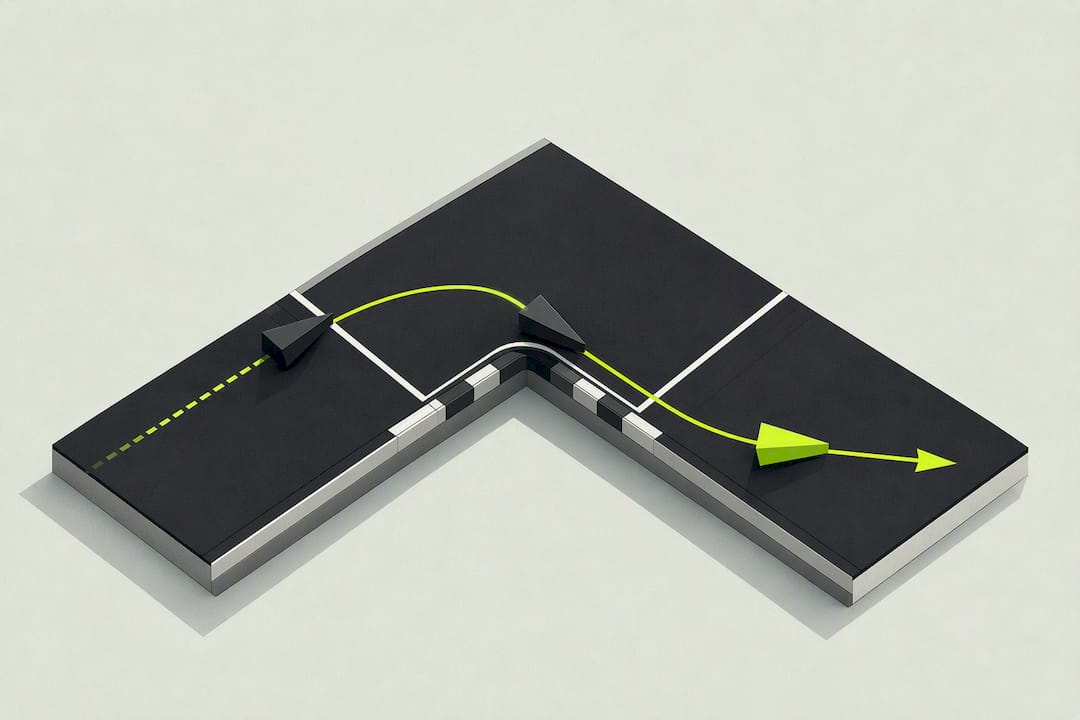
The fastest way through a 90 degree corner in F1 26 is a drop-brake entry that unloads the front axle fast, a late aggressive flick to shorten the radius, and an exit-first throttle policy instead of chasing minimum apex speed. Validate the change by comparing your brake-release timing, apex speed, and exit speed phase by phase.
TL;DR:
- The drop-brake technique, rapid flick, and exit-first throttle are crucial for maximizing speed through 90 degree corners and should be practiced systematically.
- Effective cornering requires precise timing of the brake release, steering flick, and throttle application, with each phase tracked and refined through specific drills.
- Setup adjustments like rearward brake bias, softer differential, and increased front stability can significantly improve car rotation without compromising stability.
- Wet conditions demand a more gradual approach, softer flicks, and cautious throttle application to maintain grip and avoid unsettle the car.
- Analyzing lap phases and comparing against reference laps using tools like Virew enable drivers to quantify progress and confirm technique improvements across sessions.
Table of Contents
- What Makes a 90 Degree Corner Different From Other Turns?
- How Should You Brake and Steer Into a 90 Degree Corner?
- Which Setup Changes Help the Car Rotate at 90 Degree Corners?
- How Do You Practice the Braking-to-Throttle Transition?
- How Should Your Technique Change Between Time Trial, Qualifying, and Race?
- How to confirm your 90 degree corner technique is faster?
- How Do Wet Conditions Change Your Approach to 90 Degree Corners?
- How Do You Stay Mentally Locked In Through a 90 Degree Corner?
- How Should Curbs and Track Surface Change Your Line at 90 Degree Corners?
- Why the Braking-to-Throttle Transition Is the Real Skill
- Turn Your 90 Degree Corner Gains Into Faster Lap Times
- Sources
- FAQ
What Makes a 90 Degree Corner Different From Other Turns?
A 90 degree corner, the right-angle turns you find at places like Turn 1 in Austria, the Turn 8/9 chicane exit at Baku, or the hairpin sequence at the Losail layout, punishes a different mistake than a fast sweeper does. In a high-speed corner you're managing minimum speed and aero balance. In a 90 degree corner you're managing rotation speed: how fast you can point the car without scrubbing off the speed you just carried in.
Telemetry-based coaching research backs this up directly. Corner coaching from telemetry shows that technique priority actually changes by corner type: exit throttle application dominates hairpins, momentum management rules chicanes, and the braking-to-throttle transition is the single biggest lap-time factor in medium-speed corners, which is exactly where most 90 degree turns sit. A blanket coaching cue like "brake later" or "trail brake more" often makes things worse if you apply it to the wrong corner shape.
The industry term for what separates fast drivers here is the braking-to-throttle transition phase, the window between releasing the brake and getting back to meaningful throttle. Shrinking that window without losing rotation is the entire skill.
How Should You Brake and Steer Into a 90 Degree Corner?
Drop braking is the technique that matters most. You hit maximum brake pressure almost immediately on turn-in approach, then release that pressure rapidly rather than bleeding it off gradually. Sim racing guidance on braking mistakes confirms this pattern: a rapid brake-release right before the flick reduces understeer and helps the car rotate, because a loaded front tire simply can't turn as sharply as an unloaded one.
Trail braking still has a place, but only in small doses. Carrying a touch of brake pressure past turn-in helps keep the front planted on corners with a late apex or a downhill entry. The mistake is over-trailing: holding brake pressure deep toward the apex increases tire degradation and often causes understeer right when you need rotation the most. Treat trail braking as a tool for specific corners, not a default habit.
The flick itself is a late, sharp steering input, timed to arrive after most of the brake pressure is gone. This shortens the effective radius of the corner and rotates the car quickly instead of asking it to arc through a long, slow turn. Top-level driving analysis of aggressive 2026-era styles describes this as shortening the corner radius, a technique that produces real lap-time gains but demands precise rear-end control, since a late flick that overshoots invites snap oversteer.
Throttle timing follows the same logic. Apply partial throttle right at the apex, not full throttle, then roll into full throttle as the car unwinds and the rear tires regain grip. Early full throttle without proper rotation just spins the rear or drags the car wide. This also affects your ERS deployment window, since a clean, early roll-on gives you more usable straight-line distance to deploy stored energy before the next braking zone.
Common mistakes at 90 degree corners:
- Braking too gradually instead of dropping pressure fast, which leaves the front loaded through turn-in.
- Trail braking out of habit rather than necessity, dragging the front tire's grip budget into the apex.
- Turning in too early with a gentle arc instead of committing to a late flick.
- Flooring the throttle before the car has actually rotated, which just adds wheelspin.
Pro Tip: Practice the flick in isolation first. Take a single 90 degree corner and run five laps focused only on delaying your steering input by a fraction of a second longer each lap, watching where the car starts to protest. That's your real limit, not the one you assumed.
Which Setup Changes Help the Car Rotate at 90 Degree Corners?
Driving technique only gets you so far if the car fights you at every right-angle turn. A handful of setup changes make rotation easier without wrecking stability elsewhere.
- Brake bias: Shift it 1 to 2% rearward to help the rear step in during the flick, but watch for instability under straight-line braking before the corner. Too much rearward bias turns a stable stop into a nervous one.
- Differential: Soften the on-throttle diff slightly to improve traction and reduce wheelspin on exit. A stiffer off-throttle diff setting helps the rear rotate on entry, which pairs well with the drop-brake technique.
- Aero balance: Favor a touch more front stability on tracks with several 90 degree corners in sequence. Going too low on front downforce to chase straight-line speed makes the car reluctant to rotate exactly where you need it most.
- Tyre pressures and camber: Slightly lower pressures and a touch more negative camber improve mechanical grip at the low-to-medium speeds typical of right-angle corners, at some cost to peak-speed stability elsewhere.
Change one variable at a time. Stack brake bias, diff, and aero changes together in the same session and you won't know which adjustment actually fixed (or broke) your rotation.
How Do You Practice the Braking-to-Throttle Transition?
Three drills train this transition directly, and each one gives you a specific number to chase rather than a vague feeling of "that felt better."
- Braking-to-flick repetitions. Pick one 90 degree corner and set a fixed braking marker. Run 10 laps focused only on the drop-brake and flick, logging your turn-in speed each time. The goal isn't the lowest turn-in speed, it's the highest turn-in speed that still lets you complete the flick cleanly.
- Apex-throttle timing. Same corner, now focus on partial throttle at the apex followed by a progressive roll-on. Log your apex speed and how quickly you reach full throttle afterward. Faster throttle recovery without wheelspin is the target.
- Exit-priority laps. Run a full lap but grade yourself only on 50-meter exit speed out of the 90 degree corner, ignoring entry and apex speed entirely. This isolates the trade-off between ERS harvest on the brake and ERS deploy on the straight that follows.
Structure a 30 to 60 minute block like this: five minutes warming tires and brakes, 30 to 40 minutes split across the three drills above, then a short cool-down set of two or three clean laps to confirm the changes stuck. Log turn-in speed, apex speed, and 50-meter exit speed every rep. Those three numbers tell you exactly which phase improved and which one still needs work, which matters because early throttle application at the apex is a downstream effect of good rotation, not a fix on its own. Chase the throttle number without fixing entry rotation and you'll just add wheelspin.
How Should Your Technique Change Between Time Trial, Qualifying, and Race?
Session type changes what "correct" looks like at the same corner.
- Time Trial rewards maximal, low-variance inputs on a single flying lap. Push the drop-brake later than you would in race conditions and commit fully to the aggressive flick, since there's no tire life or race position to protect.
- Qualifying asks for the same peak commitment but with tire temperature and ERS charge prepared in advance. One mistake ends the lap, so the flick needs to be practiced, not improvised.
- Race conditions call for consistency over one-lap heroics. Favor a slightly earlier, smoother brake release and a more conservative flick to protect tire wear across a stint, and prioritize exit speed over an aggressive apex, since tire degradation punishes repeated rotation stress far more over 20 laps than it does over one. The 2026 regulation changes to F1 braking systems also affect how braking duty and energy recovery interact lap after lap, which matters more in race stints than in a single qualifying lap.
How to confirm your 90 degree corner technique is faster?
Feeling faster and being faster are two different things, and the only way to close that gap is to look at the actual lap. A lap analysis workflow can break a lap into corner phases, so you can see brake point, turn-in speed, apex speed, and exit speed for the same 90 degree corner across multiple attempts.
- Upload a reference lap and a new lap from the same session, then tag the corner you've been drilling.
- Review the phase breakdown for both laps side by side: where you braked, how fast you were carrying speed at turn-in, your apex speed, and your exit speed.
- Set a specific improvement target, such as a higher turn-in speed at the same braking point, and track it across your next few sessions rather than judging a single lap.
- Use skill ratings to see whether your corner entry or your exit is the bigger limiter right now, so your next practice block targets the actual weak phase instead of guessing.
Pro Tip: Don't just compare your fastest lap to your slowest one. Compare two laps that felt similar in the moment. That's where the phase breakdown actually teaches you something, because the difference is in the details you couldn't feel from the seat.
Read the full walkthrough on how to use Virew for lap analysis if you want the step-by-step upload process before your next session.
How Do Wet Conditions Change Your Approach to 90 Degree Corners?
Wet running punishes every technique described above if you apply it at full intensity. Stretch the braking zone longer and smoother instead of dropping brake pressure sharply, since a sudden release on a wet surface can unsettle the front before it's ready to turn.
- Soften the flick into a more progressive steering input; an aggressive late turn-in is far more likely to trigger snap oversteer in low grip.
- Roll onto throttle more gently at the apex, since wet tires have a narrower window before wheelspin turns into a spin.
- Consider softer suspension and a smaller pressure drop than you'd normally run, prioritizing predictable grip over outright pace.
- If the surface is genuinely low grip, abandon the flick entirely and revert to a smoother, progressive steering arc through the corner.
How Do You Stay Mentally Locked In Through a 90 Degree Corner?
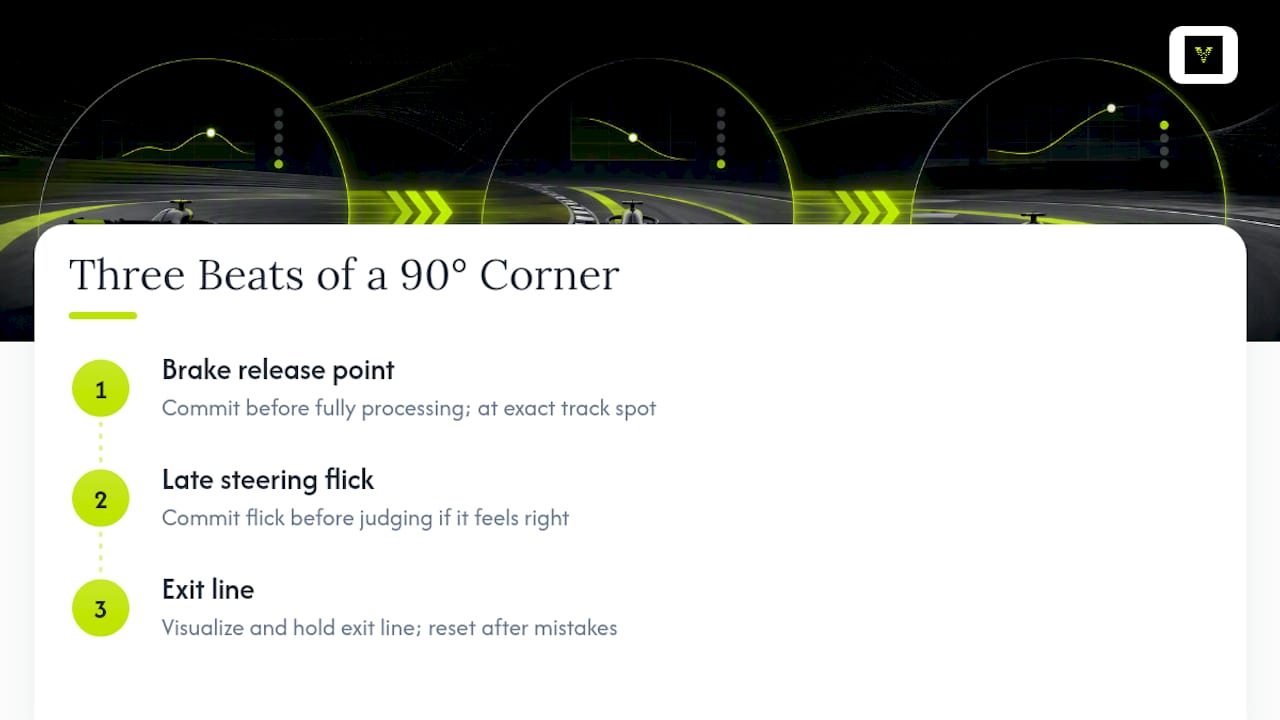
The late flick technique described above only works if you commit to the brake release and steering input before you've fully processed whether it feels right, and that's a mental skill as much as a physical one. Hesitation is what turns a clean drop-brake into a ragged one.
Visualize the corner in three distinct beats rather than as one continuous action: the brake release point, the flick, and the exit line. Drivers who mentally chunk a 90 degree corner into these three phases tend to execute each one more decisively than drivers who think of the corner as a single blur of inputs. Before a Time Trial lap, run through those three beats in your head at the exact spot on track where they happen, not as an abstract mental checklist beforehand.
Confidence at these corners comes from repetition producing predictable outcomes, not from raw bravery. If your last five attempts at a flick produced the same result, trust builds naturally and the hesitation disappears. If your last five attempts produced five different outcomes, more visualization won't fix that. You need the practice drills to narrow the variance first.
One practical habit: after a spin or a bad exit, resist the urge to immediately attack the same corner harder on the next lap. Take one lap to reset your mental picture of the brake point and flick timing, then commit again. Chasing the mistake with more aggression usually compounds it.
How Should Curbs and Track Surface Change Your Line at 90 Degree Corners?
Not every 90 degree corner has the same surface underneath it, and treating them all identically costs time. High curbs at a corner like the Turn 14 hairpin type layout will unsettle the car if you clip them aggressively mid-flick, so back off the apex curb usage slightly on corners where the curb is aggressive or sausage-shaped, and take a tighter line instead.
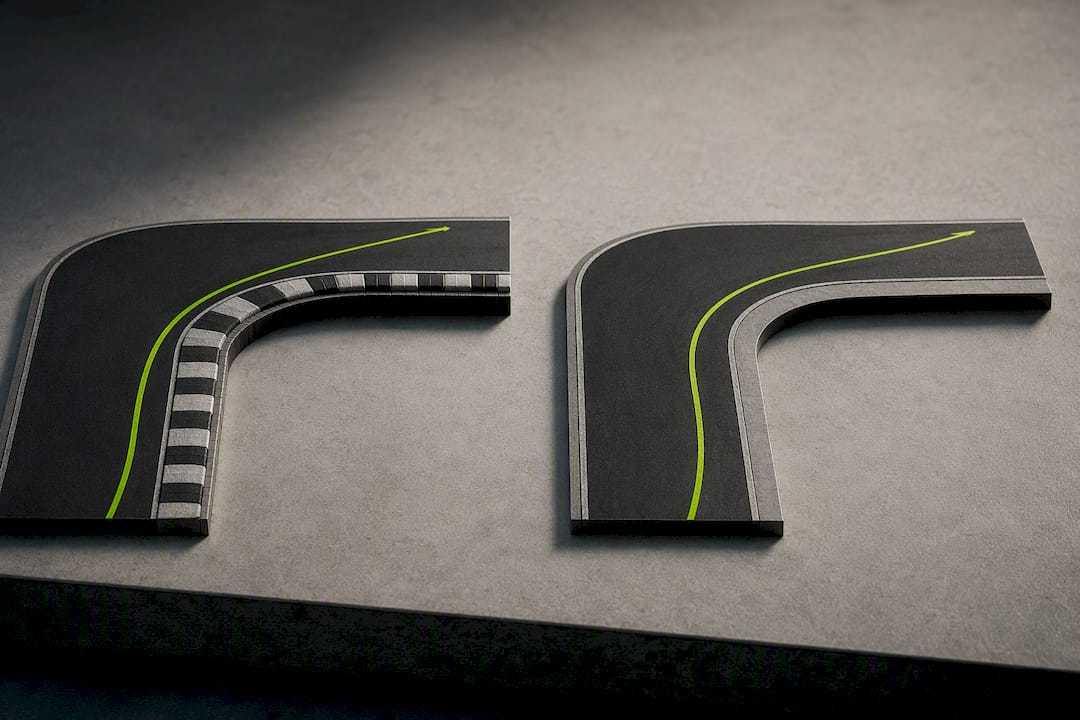
Flatter, ride-friendly curbs reward using more of the track width, letting you straighten the corner further and carry extra exit speed. The general rule: use the curb to widen your exit line only when the curb profile is low and smooth, and protect the car's stability by staying off it when the curb is aggressive.
Track surface grip level also shifts within a single lap. A 90 degree corner right after a high-speed section often has a dustier, lower-grip racing line early in a session before enough rubber goes down, which means your drop-brake and flick timing from your first few laps won't match what's needed once the track rubbers in. Adjust your braking marker slightly earlier in low-grip conditions and re-test it as the session progresses rather than assuming your reference lap still applies.
Curb-heavy exits also interact with your differential setup. A softer on-throttle diff, mentioned earlier for traction, becomes even more valuable on corners where you're using curb on exit, since the extra vertical movement from the curb makes wheelspin more likely right when you're trying to roll onto full throttle.
Why the Braking-to-Throttle Transition Is the Real Skill
Most coaching advice treats 90 degree corners as a braking problem or a throttle problem. It's neither. It's the handoff between the two that separates drivers who gain time here and drivers who lose it. Drive the transition deliberately, measure it with Virew's phase breakdowns, and repeat the drills until the flick becomes automatic. That loop, drive, analyze, improve, repeat, is what turns a corner you dread into one you look forward to.
— Virew
Turn Your 90 Degree Corner Gains Into Faster Lap Times
Virew is the lap-analysis workflow built for exactly the kind of corner-by-corner detail this article covers. Upload your F1 26 gameplay laps and get a phase breakdown of braking point, turn-in speed, apex speed, and exit speed for any corner you tag, including the 90 degree turns where the braking-to-throttle transition matters most.
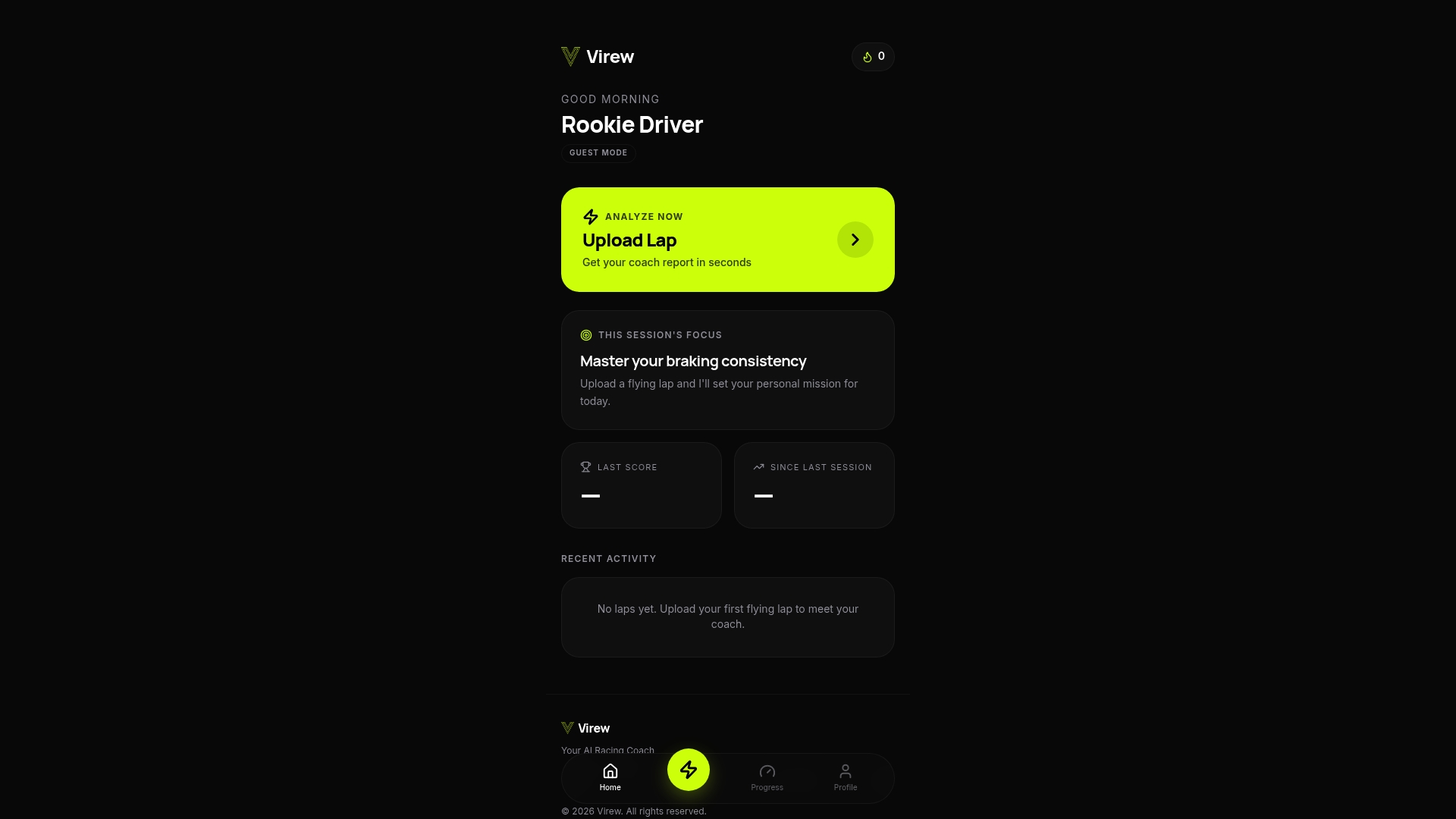
You get skill ratings that show whether entry or exit is your current limiter, progress tracking across sessions so you're not guessing whether a setup change actually helped, and a structured way to confirm the drills in this article are working rather than just feeling faster. Start with the F1 26 lap analysis tool: upload a reference lap, tag your toughest 90 degree corner, and run the analysis to see exactly where your next tenth is hiding.
Sources
Claims on braking behavior and drop-braking draw on F1 braking mechanics and sim racing braking fixes. Corner-type coaching priorities come from telemetry-based corner coaching, and 2026 car and ERS context from Motorsport.com's technical analysis.
- Why 2026's regulations are also changing the game for F1's brakes
- 5 Braking mistakes destroying your laps in F1 25 (How to fix them)
FAQ
Should I Drop Brake or Trail Brake Into a 90 Degree Corner?
Drop braking, a fast maximum-pressure application followed by rapid release, is the default for most 90 degree corners because it frees the front tire for a late flick. Trail braking only helps on specific corners with a late apex or downhill entry, and over-trailing into the apex tends to cause understeer.
What's the Fastest Setup Change to Try First?
Start with a small rearward brake bias shift of 1 to 2% and a softer on-throttle differential setting, then test each change separately across a few laps before combining them.
How Do I Know My 90 Degree Corner Technique Actually Improved?
Upload your laps to Virew and compare the phase breakdown, brake point, turn-in speed, apex speed, and exit speed, between your old and new attempts at the same corner rather than relying on how the lap felt.
Does Wet Weather Change the Flick Technique?
Yes. In wet sessions, replace the aggressive late flick with a more progressive steering input and stretch out the braking zone, since low grip punishes sharp inputs far more severely than in dry conditions.
Should I Use the Same Technique in Time Trial and Race?
No. Qualifying rewards maximal, late-braking commitment on a single lap, while Race conditions call for a smoother brake release and conservative exit-first choices to protect tire life across a stint.